Audio Annotation Services
Human-verified transcription, speaker identification, emotion detection, and intent labeling for voice AI, ASR systems, and conversational platforms.

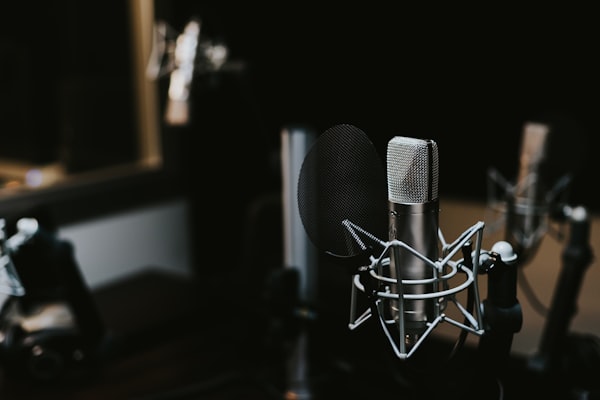
Teach Your AI to Listen
Voice interfaces, automatic speech recognition, and audio intelligence systems all depend on accurately labeled audio data. Our annotation teams transcribe speech with verbatim precision, identify and segment individual speakers, classify emotional tone and intent, and label acoustic events — across dialects, accents, and noise conditions that challenge automated systems. We combine native-speaker linguists with specialized audio tooling to deliver training data that captures the full complexity of human speech.
- Verbatim and normalized transcription
- Speaker diarization and turn-taking annotation
- Emotion and sentiment detection in speech
- Intent classification for conversational AI
- Acoustic event detection and environmental sound labeling
Audio Annotation Methods
Specialized techniques for the unique challenges of audio and speech data.
Speech Transcription
Word-for-word and normalized transcription with timestamps, punctuation, and speaker attribution. We handle overlapping speech, background noise, accented speakers, and code-switching between languages.
Speaker Diarization
Identifying and segmenting individual speakers within multi-party conversations. Each speaker is assigned a unique ID with precise start/end timestamps, enabling models to learn who said what and when.
Emotion Detection
Classifying vocal emotion (happy, sad, angry, neutral, frustrated) based on tone, pitch, pace, and linguistic cues. Supports both categorical and dimensional (valence-arousal) emotion models for nuanced sentiment analysis.
Intent Classification
Labeling spoken utterances with user intent categories for virtual assistants, IVR systems, and customer service bots. We extract intents, slots, and entities from natural conversational speech.
Sound Event Detection
Labeling non-speech audio events — alarms, machinery sounds, vehicle noises, environmental ambience — with precise timestamps. Used in security systems, industrial monitoring, and smart home applications.
Phonetic Annotation
IPA transcription and phoneme-level alignment for pronunciation modeling, text-to-speech (TTS) training, and accent analysis. Critical for building natural-sounding speech synthesis systems across languages.
Frequently Asked Questions
Explore More Services
Text & NLP Annotation
Named entity recognition, sentiment analysis, and classification for natural language processing.
Learn moreLLM Training Data
Instruction datasets and fine-tuning corpora for large language models and conversational AI.
Learn moreData Annotation
Full-spectrum annotation across every data modality with managed teams and enterprise-grade quality.
Learn moreBuild Voice AI That Truly Understands
Send us sample audio in any language and we'll return transcribed, labeled results within 48 hours. Experience the difference native-speaker annotation makes.